A VENDOR YOU APPROVED TWO YEARS AGO HAS CHANGED OWNERSHIP, ADDED SUB-PROCESSORS, AND LET THEIR SECURITY CERTIFICATION LAPSE. YOUR RECORDS STILL SHOW GREEN.
The Problem
Why periodic reviews keep finding gaps that were already there
Compliance is treated as a calendar event. You schedule the review, gather the evidence, find the gaps, and remediate. The problem is that between reviews, the gaps already exist. Continuous compliance means the monitoring never stops — not just stricter reviews on the same schedule.
Posture drifts between reviews
The vendor changed sub-processors in March. Their security certification lapsed in May. They added a data scope in June. Your next review is in September.
Evidence has to be assembled
Every audit, every regulatory request, every internal review starts with the same scramble — DPAs from one system, certifications from another, scope from someone's memory.
Rules are policies, not enforcement
You wrote a vendor policy. It lives in a document. Nothing actually fires when a vendor breaks it. Enforcement is human, episodic, and inconsistent.
The Result
Findings you could have prevented. Remediation projects that consume real time. Trust gaps with regulators and customers that take years to rebuild.
What BRM brings
Charter Rules that watch continuously
Every policy you care about runs as a Rule. Certification expires, sub-processor changes, scope drifts — the Rule fires before the gap becomes a finding.
Automatic alerts at the moment of risk
Not a weekly report. Not a monthly review. The moment posture changes, the right person knows.
Third-party compliance readiness
Sub-processor lists, data flows, security attestations, and breach notification terms tracked as living obligations per vendor — ready for any regulatory framework.
Audit trail by default
Every contract, change, approval, and renewal action captured with timestamps and owners. Evidence already exists when the request arrives.
BRM watches every vendor every day — so drift gets caught the moment it happens, not at the next scheduled review.
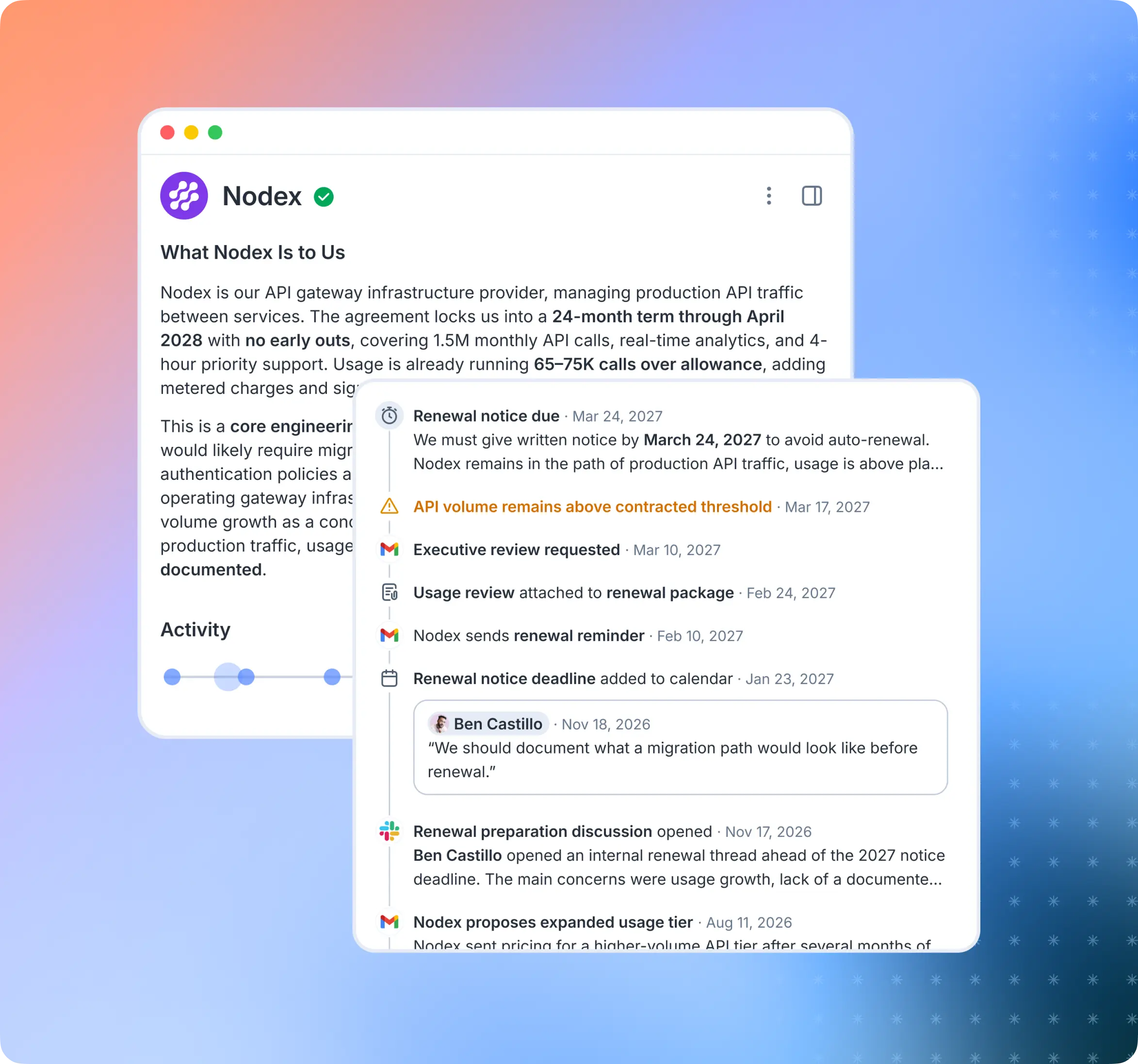
Security certifications, DPAs, and sub-processor lists monitored as living obligations — no manual tracking required.
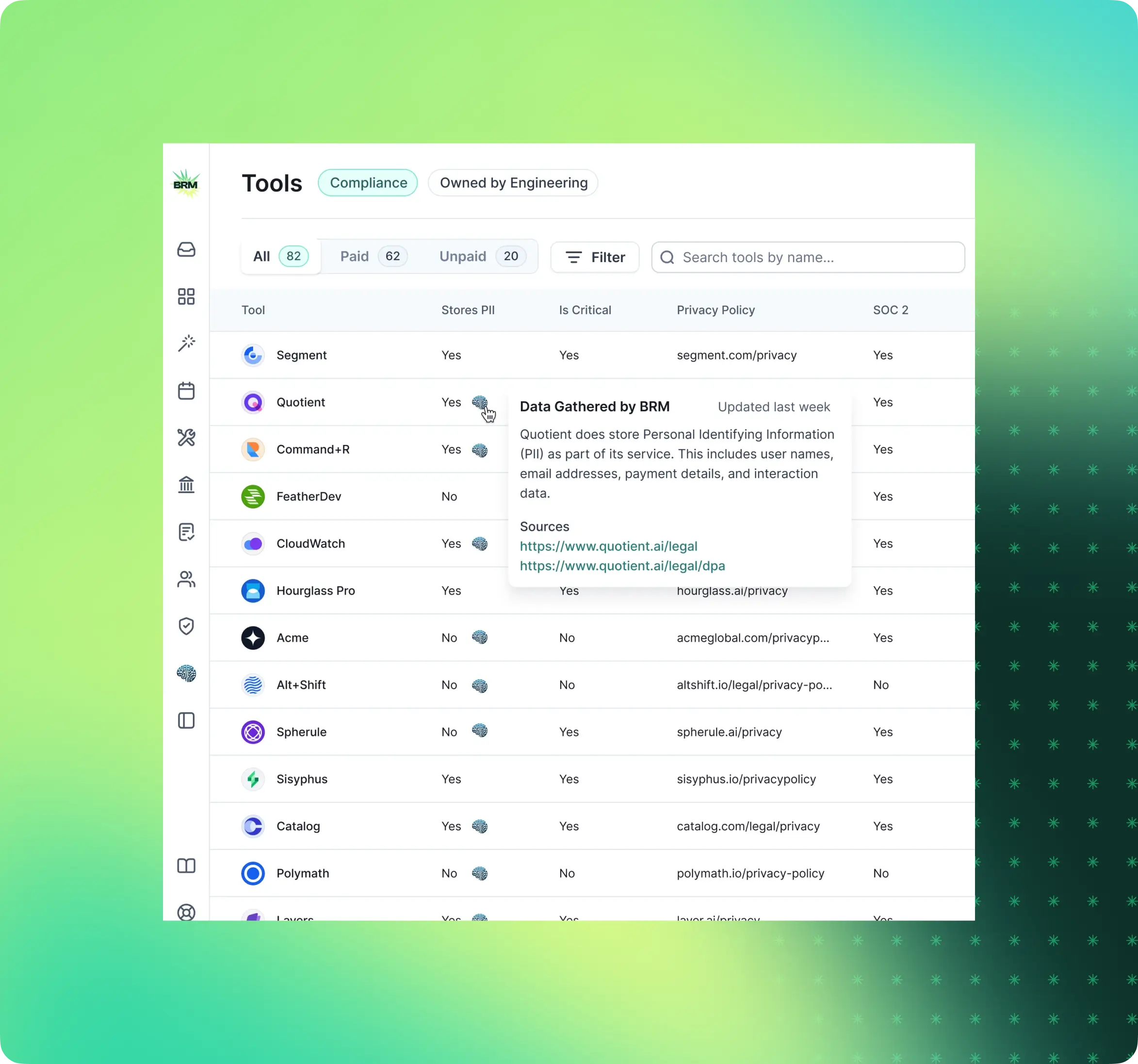
Charter Rules fire the moment a vendor breaks a policy — so exceptions are caught automatically, not found in audits.
Every contract, change, and approval captured with timestamps — the audit trail exists before any request arrives.
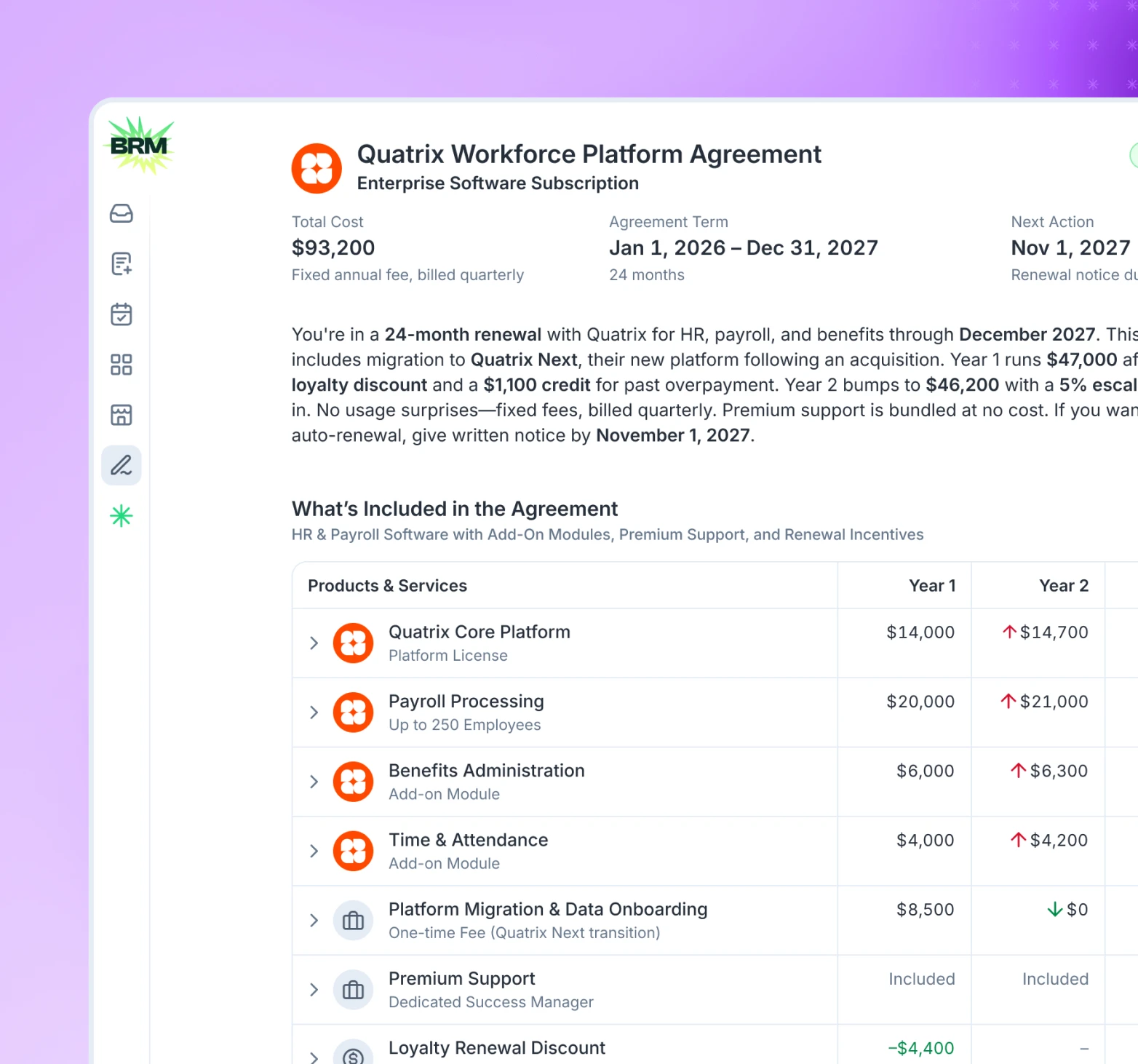
When you can see the full relationship, you stop reacting and start deciding.
Every agreement your business has. Complete, accurate, always current. BRM makes sure no relationship — and no context inside it — ever goes missing.
51Mins
Saved per contract
100%
Renewal visibility
6-20%
Average vendor spend reduction









"Using BRM is like looking through your windshield. Other tools we used in the past were like looking in the rearview mirror."

"The renewal calendar and renewal notifications are so good... I love how real-time BRM is."

"BRM's automated alerts the moment a new contract arrives is my favorite thing - I get the heads-up, but I don't have to do anything. The contract and every key detail show up instantly, whether it comes in via our ERP, card, inbox, wherever, so I never have to dig through inboxes or become a detective to find what matters."

"BRM gave our finance team expert-level insight into vendor spend, without the hours of manual tracking."

"BRM saved me $10k in 110 seconds."


Bring compliance into the present tense.
See every obligation, every certification, every change clearly the moment it matters. Make compliance a continuous state, not a quarterly scramble.
Frequently Asked Questions
Find answers to common questions about BRM and how we work
SSO, role-based permissions, encryption, and detailed audit logs come standard. BRM is also SOC 2 Type 2.
Minutes to connect; expect a first pass of your vendor landscape and renewal calendar within a day.
Yes—simply upload your contracts in BRM, and we will create the vendor and software records for you.
You do. BRM prepares and executes steps only after your sign-off, preserving a full audit trail.