A VENDOR YOU APPROVED TWO YEARS AGO HAS CHANGED OWNERSHIP, ADDED SUB-PROCESSORS, AND LET THEIR SECURITY CERTIFICATION LAPSE. YOUR RECORDS STILL SHOW GREEN.
The Problem
Why IT keeps finding out last
Tools get bought on credit cards, signed up for with a work email, and integrated through OAuth before anyone files a ticket. Your CMDB shows what you provisioned. Your vendor list shows what got billed. Neither shows what's actually running.
Shadow IT multiplies
Every team buys their own tools. Every tool wants OAuth access to your data. Most of them never touch IT until something breaks, leaves, or gets audited.
No real inventory
The CMDB is partial. The SaaS management tool sees what's SSO'd. The card data sees what's billed. None of them see the whole picture.
Compliance is a guessing game
You can't certify what you don't know exists. Vendor risk reviews skip half the surface area because nobody surfaced it.
The Result
A tool that was never approved holds data that needs to be deleted, by a vendor you never assessed, on a contract that auto-renews next week.
What BRM brings
Automatic vendor discovery
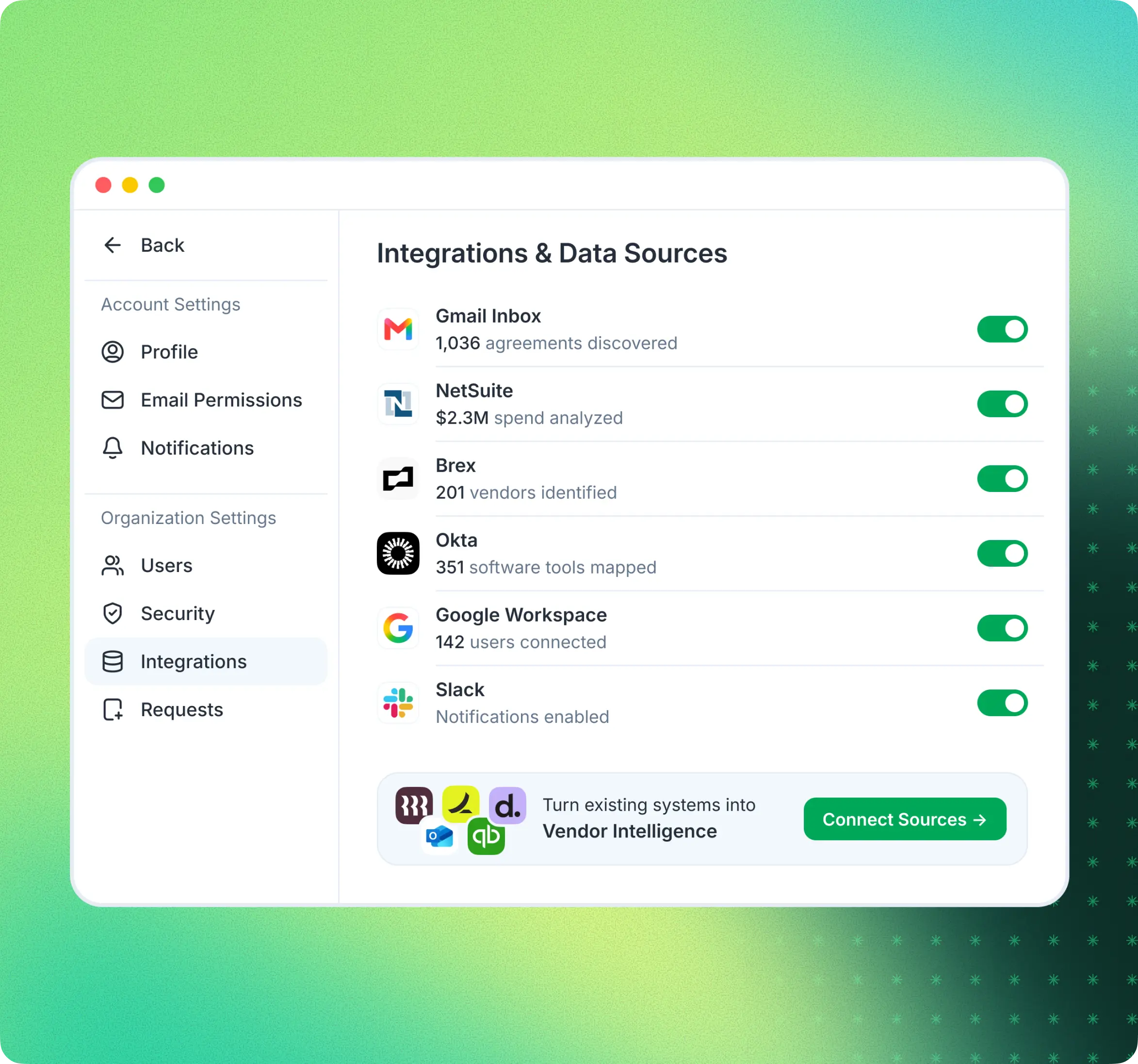
Inbox, ERP, card, and SSO data fused to surface every vendor in your environment, including the ones that never made it to the CMDB.
Shadow IT and shadow AI surfacing
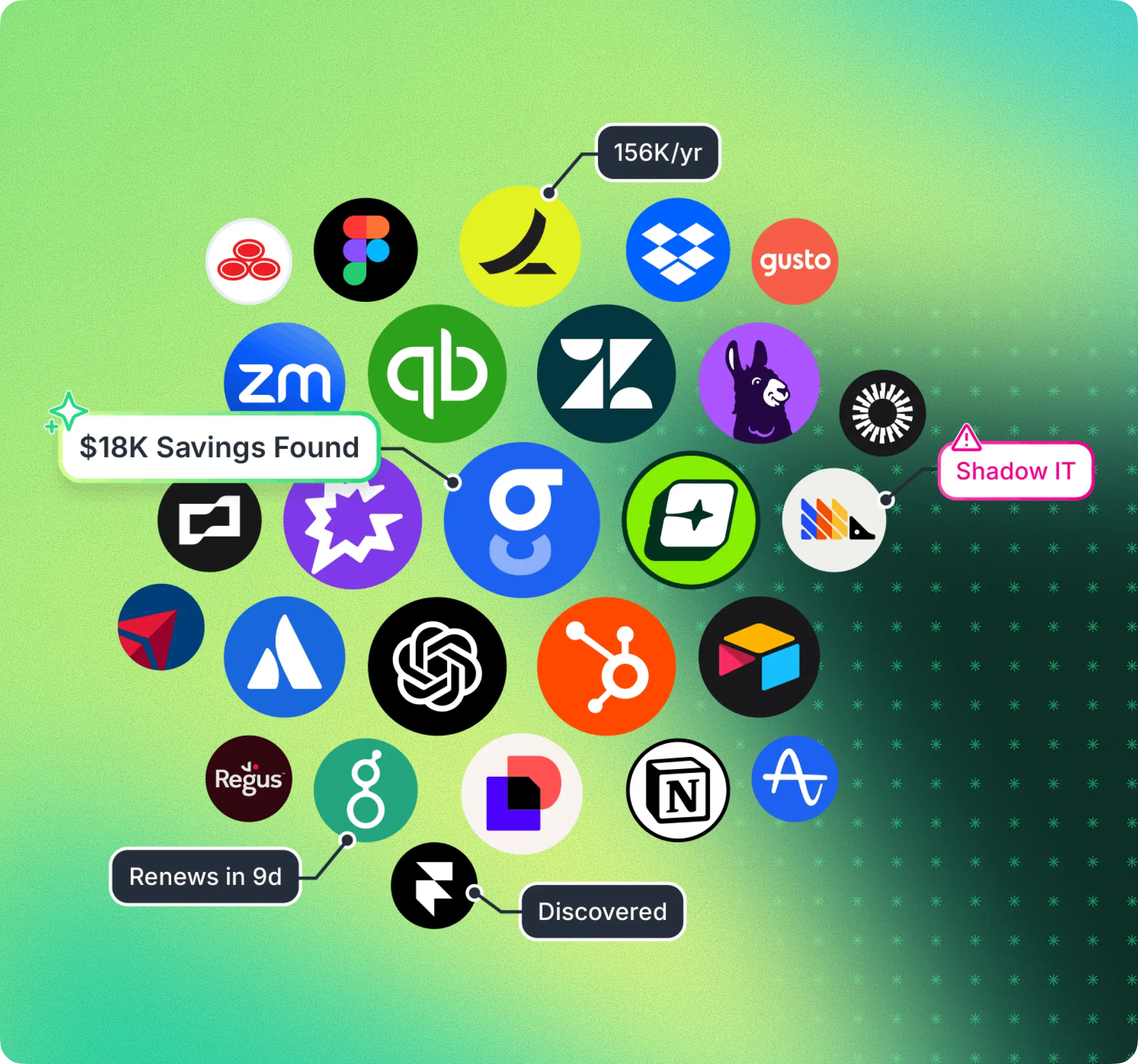
New tools detected the moment they're paid for or signed up for, with the contract, the owner, and the data scope attached.
Full vendor inventory
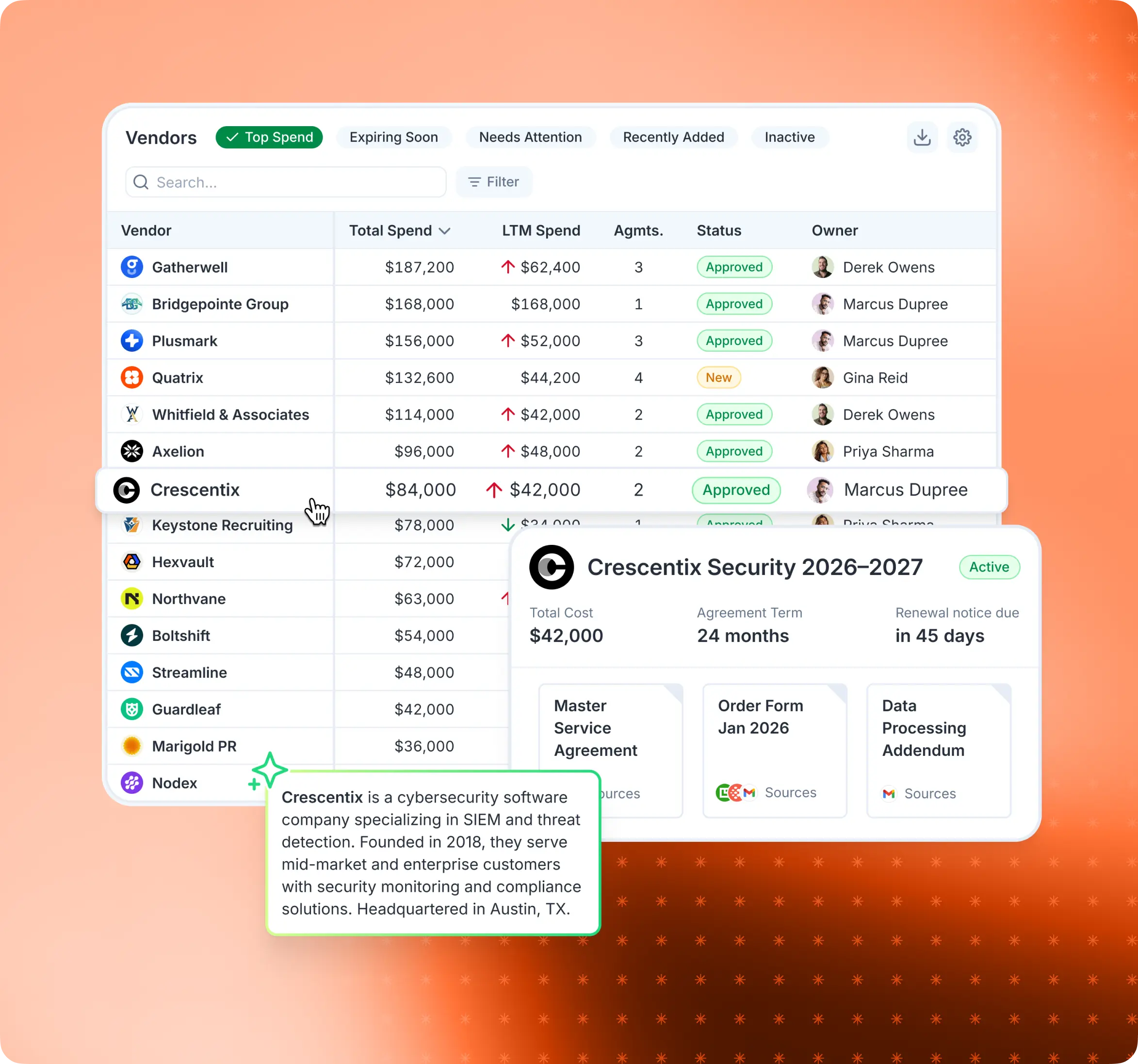
One canonical list of every tool, who owns it, what it touches, and what it costs, kept current automatically.
Compliance tracking
Certifications, DPAs, sub-processor lists, and access scopes monitored per vendor without a survey ever going out.
Every tool in your environment surfaced in one canonical list — whether it went through IT or not.
New tools detected the instant they're paid for or signed up for, with owner, contract, and data scope attached.
Certifications, DPAs, and sub-processor lists monitored continuously — no survey or manual check required.
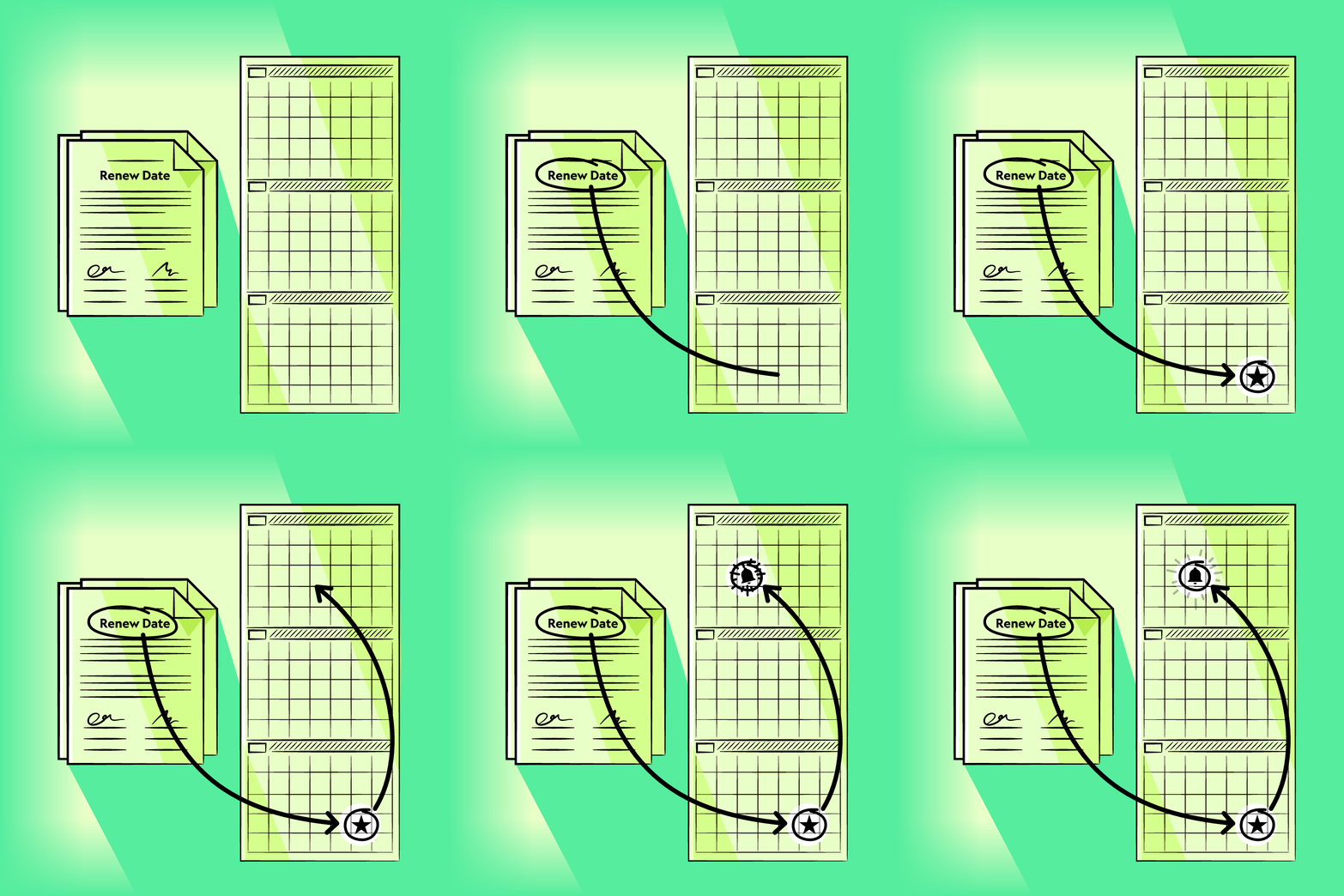
Renewal reminders, access reviews, and off-boarding steps triggered automatically when the time comes.
When you can see the full relationship, you stop reacting and start deciding.
Every agreement your business has. Complete, accurate, always current. BRM makes sure no relationship — and no context inside it — ever goes missing.
51Mins
Saved per contract
100%
Renewal visibility
6-20%
Average vendor spend reduction









"Using BRM is like looking through your windshield. Other tools we used in the past were like looking in the rearview mirror."

"The renewal calendar and renewal notifications are so good... I love how real-time BRM is."

"BRM's automated alerts the moment a new contract arrives is my favorite thing - I get the heads-up, but I don't have to do anything. The contract and every key detail show up instantly, whether it comes in via our ERP, card, inbox, wherever, so I never have to dig through inboxes or become a detective to find what matters."

"BRM gave our finance team expert-level insight into vendor spend, without the hours of manual tracking."

"BRM saved me $10k in 110 seconds."


Bring your vendor stack under control.
See every tool, every contract, every renewal clearly. Get ahead of shadow IT before it becomes shadow risk.
How it works
Discover
SuperAgents scan email and drives, surfacing every agreement and linking it to vendors, owners and spend.
Organize
Renewal dates, notice windows, line items and usage structured into a live record with a renewal calendar.
Decide & execute
BRM's AI frames options with context for your stakeholders. Then, with your approval, our SuperAgents act and preserve the audit trail.
Frequently Asked Questions
Find answers to common questions about BRM and how we work
Minutes to connect; expect a first pass of your vendor landscape and renewal calendar within a day.
You do. BRM prepares and executes steps only after your sign-off, preserving a full audit trail.
Yes—simply upload your contracts in BRM, and we will create the vendor and software records for you.
Yes—bring your templates or use ours; rules decide when to trigger them.
You define approvers per category/policy; BRM routes, logs, and ties outcomes to the vendor record.
Yes—bring your templates and thresholds; BRM triggers them automatically by category and risk.
SSO, roles/permissions, encryption, and audit logs—plus least-privilege connectors and exports on demand.
Requests flow through one front door with policy applied; usage/ownership mapping and duplicate detection curb rogue tools.
Yes—define policies once; BRM applies them automatically based on vendor category and risk.
No—BRM orchestrates vendor intake, compliance, and contract context alongside your tools.
SSO, role-based permissions, encryption, and detailed audit logs come standard. BRM is also SOC 2 Type 2.