A VENDOR YOU APPROVED TWO YEARS AGO HAS CHANGED OWNERSHIP, ADDED SUB-PROCESSORS, AND LET THEIR SECURITY CERTIFICATION LAPSE. YOUR RECORDS STILL SHOW GREEN.
The Problem
Why Operations keeps inheriting chaos
Institutional memory lives in people, not systems. The relationship manager kept the context in their head, the negotiation history in their inbox, and the vendor's direct line in their phone. When they leave, you start from zero. The vendor doesn't.
Key person risk
One person owned the relationship. They knew the AE, the escalation path, the side deals, the workarounds. When they leave, all of it leaves.
Ownership unclear
Three people claim to manage that vendor. Two of them don't anymore. The contract still has the name of someone who left a year ago.
No single source of truth
Finance has spend. IT has integrations. Legal has the contract. Operations is supposed to glue it together with a shared doc that nobody updates.
The Result
Every transition is a fire drill. Every escalation starts with 'who owns this?' Every renewal happens with less leverage than the one before.
What BRM brings
Centralized relationship ownership
Every vendor has an owner, a backup, and a full history of who managed it before, with handoff context preserved automatically.
Full history regardless of turnover
The negotiation, the side deal, the escalation, the email thread, the renewal logic — all captured in the relationship record, not the relationship manager's head.
Vendor lifecycle visibility
Onboarding, in-flight, at-risk, churning, terminated. One view across every relationship, current state always known.
Living record per vendor
Contracts, spend, performance, and history layered into one place that survives every reorg.
Every vendor has a named owner and a backup, with full context preserved so handoffs don't start from zero.
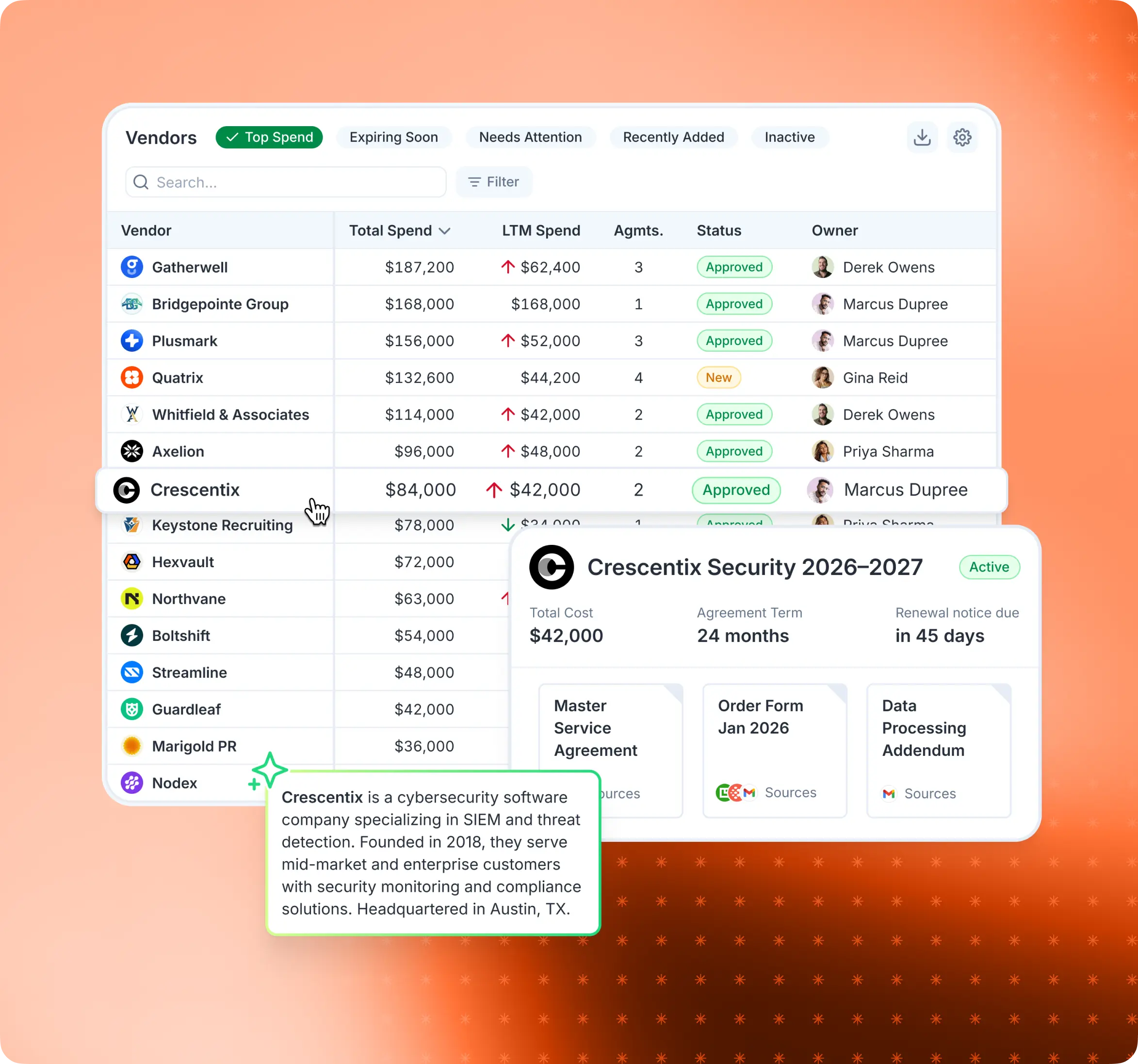
The negotiation, the side deal, the escalation — all captured in the record, not the relationship manager's head.
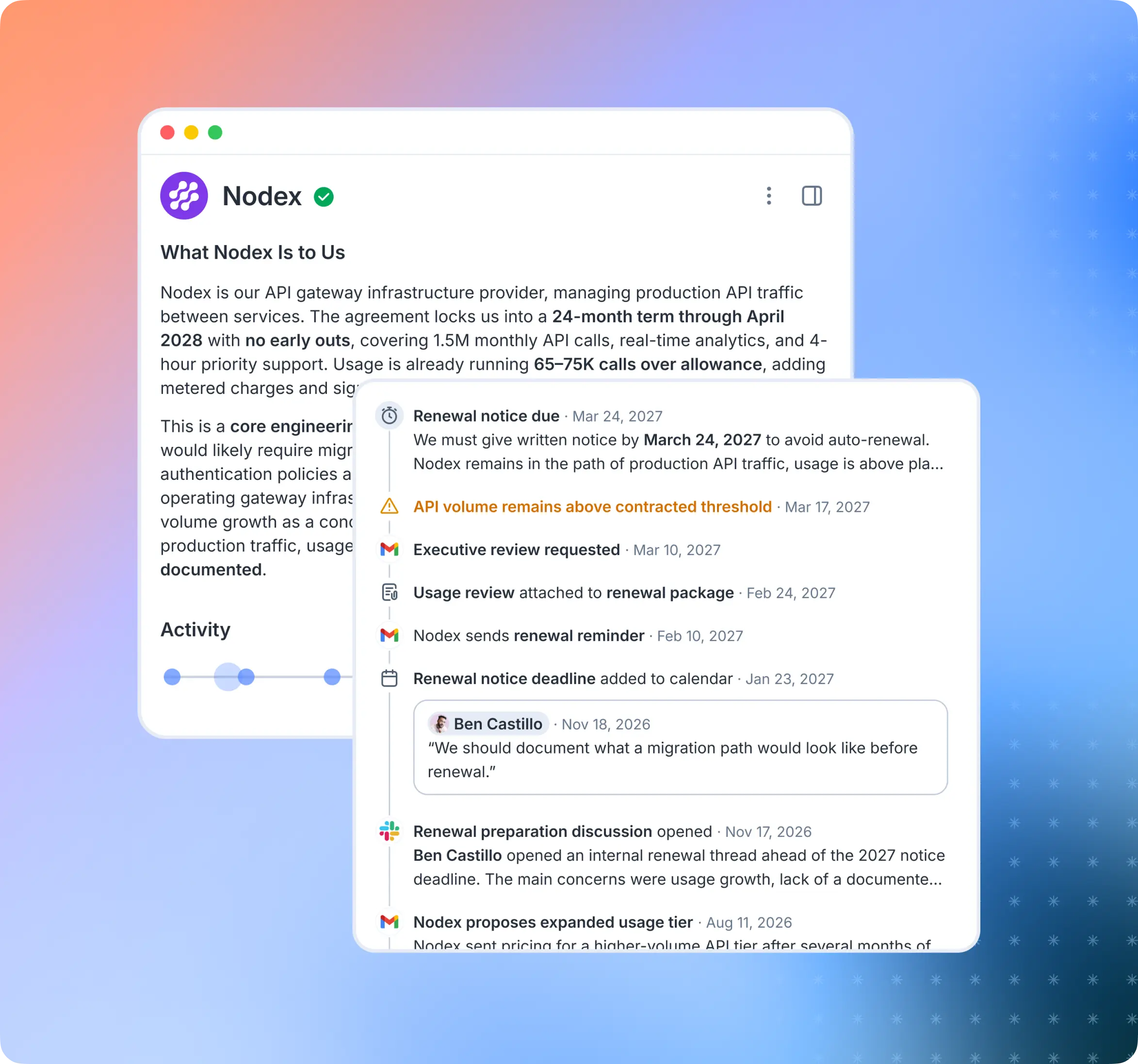
Know exactly where every vendor stands — onboarding, in-flight, at-risk, or churning — without asking anyone.
Standard processes that run every time, regardless of who owns the relationship or how long they've been there.

When you can see the full relationship, you stop reacting and start deciding.
Every agreement your business has. Complete, accurate, always current. BRM makes sure no relationship — and no context inside it — ever goes missing.
51Mins
Saved per contract
100%
Renewal visibility
6-20%
Average vendor spend reduction









"Using BRM is like looking through your windshield. Other tools we used in the past were like looking in the rearview mirror."

"The renewal calendar and renewal notifications are so good... I love how real-time BRM is."

"BRM's automated alerts the moment a new contract arrives is my favorite thing - I get the heads-up, but I don't have to do anything. The contract and every key detail show up instantly, whether it comes in via our ERP, card, inbox, wherever, so I never have to dig through inboxes or become a detective to find what matters."

"BRM gave our finance team expert-level insight into vendor spend, without the hours of manual tracking."

"BRM saved me $10k in 110 seconds."


Bring vendor operations under control.
See every owner, every relationship, every renewal clearly. Stop losing institutional memory every time someone leaves.
How it works
Discover
SuperAgents scan email and drives, surfacing every agreement and linking it to vendors, owners and spend.
Organize
Renewal dates, notice windows, line items and usage structured into a live record with a renewal calendar.
Decide & execute
BRM's AI frames options with context for your stakeholders. Then, with your approval, our SuperAgents act and preserve the audit trail.
Frequently Asked Questions
Find answers to common questions about BRM and how we work
Minutes to connect; expect a first pass of your vendor landscape and renewal calendar within a day.
You do. BRM prepares and executes steps only after your sign-off, preserving a full audit trail.
You define approvers per category/policy; BRM routes, logs, and ties outcomes to the vendor record.
Yes—simply upload your contracts in BRM, and we will create the vendor and software records for you.
Yes—bring your templates or use ours; rules decide when to trigger them.
Yes—bring your templates and thresholds; BRM triggers them automatically by category and risk.
The opposite—fewer back-and-forths, clearer questions, and immediate routing make requests faster with less rework.
You set policies once. BRM applies them everywhere and keeps the evidence current.
No—BRM unifies what they miss (intake context, renewals, ownership, compliance) and handles the follow-through.
No, but you may want to. BRM can mirror or replace forms and still auto-route, enforce policy, and maintain the vendor record.
SSO, role-based permissions, encryption, and detailed audit logs come standard. BRM is also SOC 2 Type 2.