Products
From 70 Pages to One View: Meet the Agreements Overview

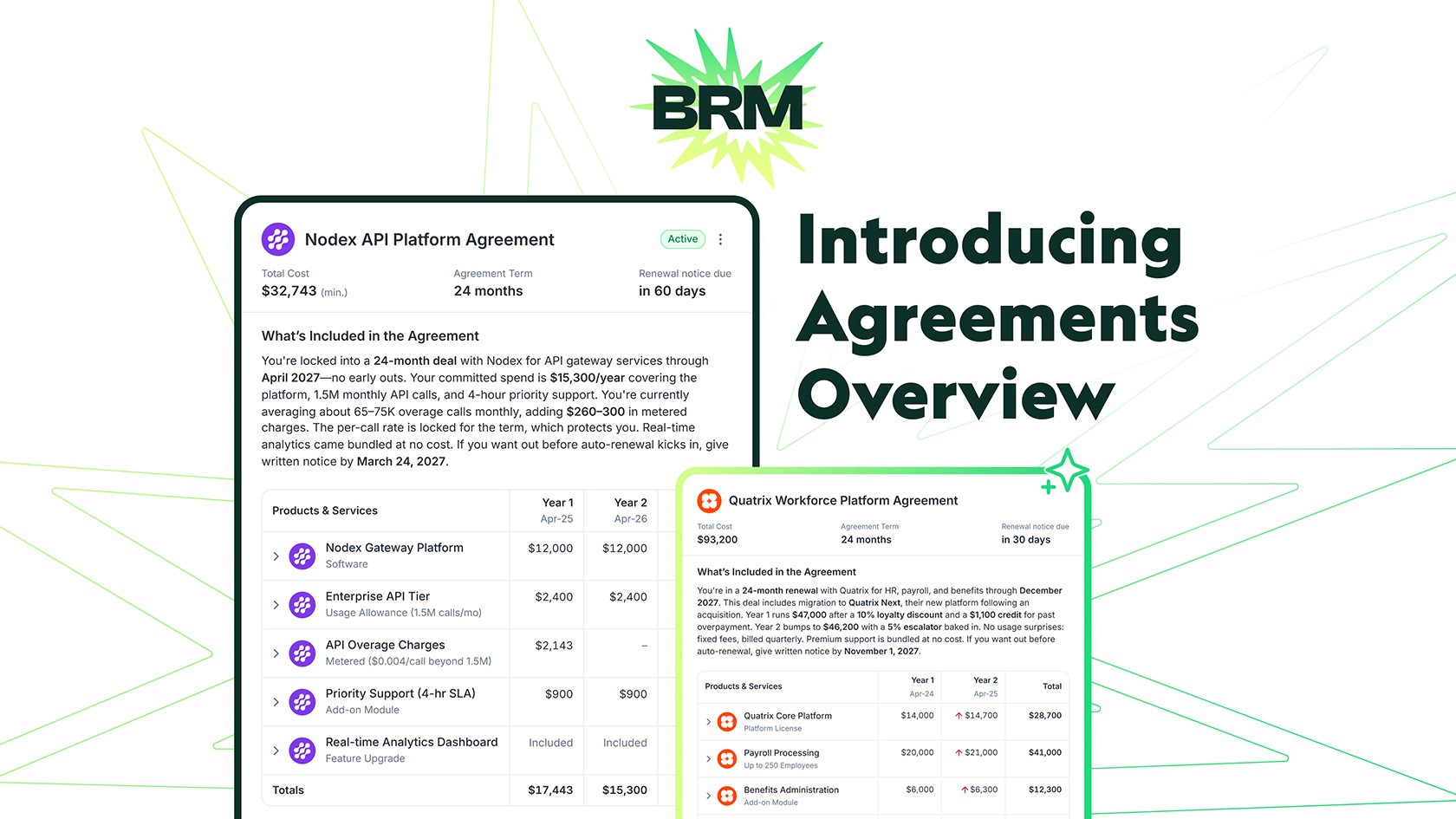
Your contracts shouldn't require a search party.
If you've ever scanned a 77-page contract to answer three simple questions—"What do we actually pay, what exactly did we buy, and when do we need to act?"—you already know the problem.
Contracts weren't designed for speed. Decisions were.
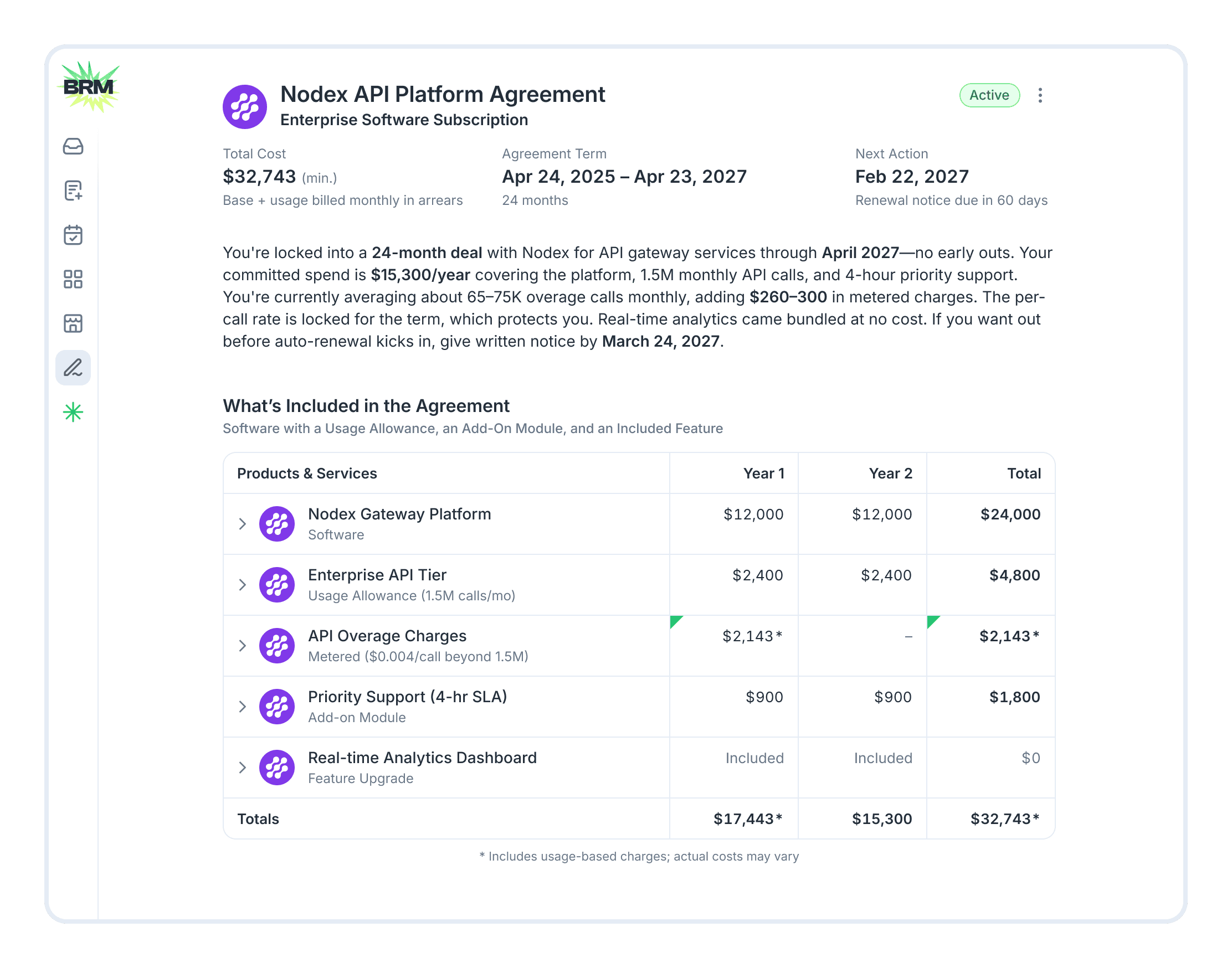
Today, that changes. We're launching the Agreements Overview: an AI Agents that turn every vendor agreement into a clear, living source of truth that automatically updates itself.
The Person Who Has the Answer Wins the Meeting
Every finance and procurement team has one: the person who always knows. Who can answer the CFO's question without hesitating. Who walks into vendor negotiations prepared. Who catches the auto-renewal before it costs the company $50K.
That person isn't smarter. They just have better information, faster.
Right now, that advantage belongs to whoever has the best memory, the most tenure, or the time to dig through PDFs. It's arbitrary. It's fragile. And everyone in the room knows it.
The Agreements Overview makes that person everyone.
It transforms your contracts into structured, queryable, decision-ready data—surfacing the facts that matter, itemizing what you bought down to line-items and SKUs, and putting AI-powered answers one question away. The new hire answers the CFO's question in 10 seconds. The procurement lead walks into the renewal with line-item ammunition. The controller knows exactly what's in effect without chasing down three amendments.
No digging. No guessing. No scrambling before the meeting.
"Before, any vendor conversation started with me trying to remember things, or someone digging for the contract, or just guessing. Now I start from a position of actually knowing. That changes everything about how those conversations go."
- Steve Nolan, Finance and Accounting, Public.com
Why This Matters
"It's 2026. Why are you reading an entire contract when AI can do it for you?"
— James McGillicuddy, CEO, BRM
The average enterprise contract is 47 pages. Important details are scattered: pricing in section 8, renewal terms in section 14, termination rights on page 41. Auto-renewal clauses buried in subsection 19(f)(ii).
Let's do the math: 50 vendor agreements. 20 minutes per agreement to manually extract key terms—what you're paying, what you bought, when it renews. That's 67 hours per year spent on basic data extraction, before you even start negotiating.
The Agreements Overview eliminates this, returning 1.5 weeks of productive time to your finance team every year.
But the real cost isn't the time. It's what you miss. The $50K auto-renewal you forgot about. The duplicate tools buried across three vendors. The termination clause on page 41 that could have saved you 18 months of payments. The vendor walks into the negotiation with perfect information about your contract. You're working from memory or scrolling through the PDF while wolfing down lunch before the meeting.
Your contracts contain some of the most important data about your business—what you're committed to, what you're paying, and when you need to act. But as PDFs are scattered across email and drives, that data is effectively dead.
What's New
1. Dynamic Header: Type-Aware Facts First
Finally know what the vendor already knows
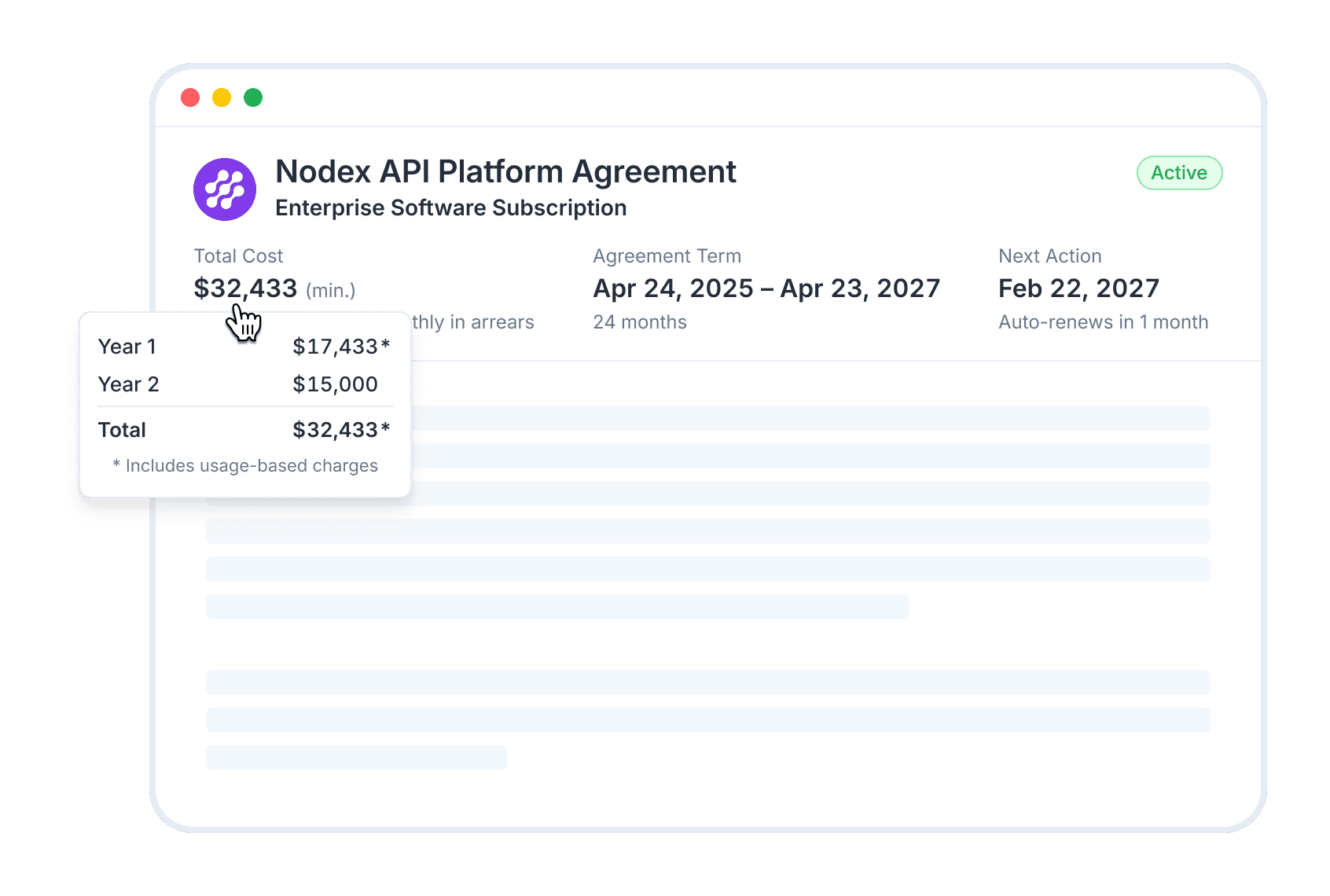
BRM detects what kind of agreement you're looking at—SaaS, services, lease, hardware—and immediately surfaces the facts that matter: annualized cost, total cost, commercial model, term, and next action.
Here's what makes this different: the agreement type determines how costs are displayed. Project-based agreements show total cost (that $10,000 project in Q1 isn't "$40,000 annualized"—it's $10,000, period). Recurring services show annualized spend (your contractor working 20 hours/week shows true annual cost, not just monthly). BRM automatically applies the right logic so you see costs the way you actually think about them.
No blank fields. No irrelevant sections. No guesswork.
The person who asks "How much do we pay?" gets their answer in 10 seconds instead of 20 minutes.
2. Line-Item Extraction: See What You Actually Bought
Expose what they hoped you'd never notice
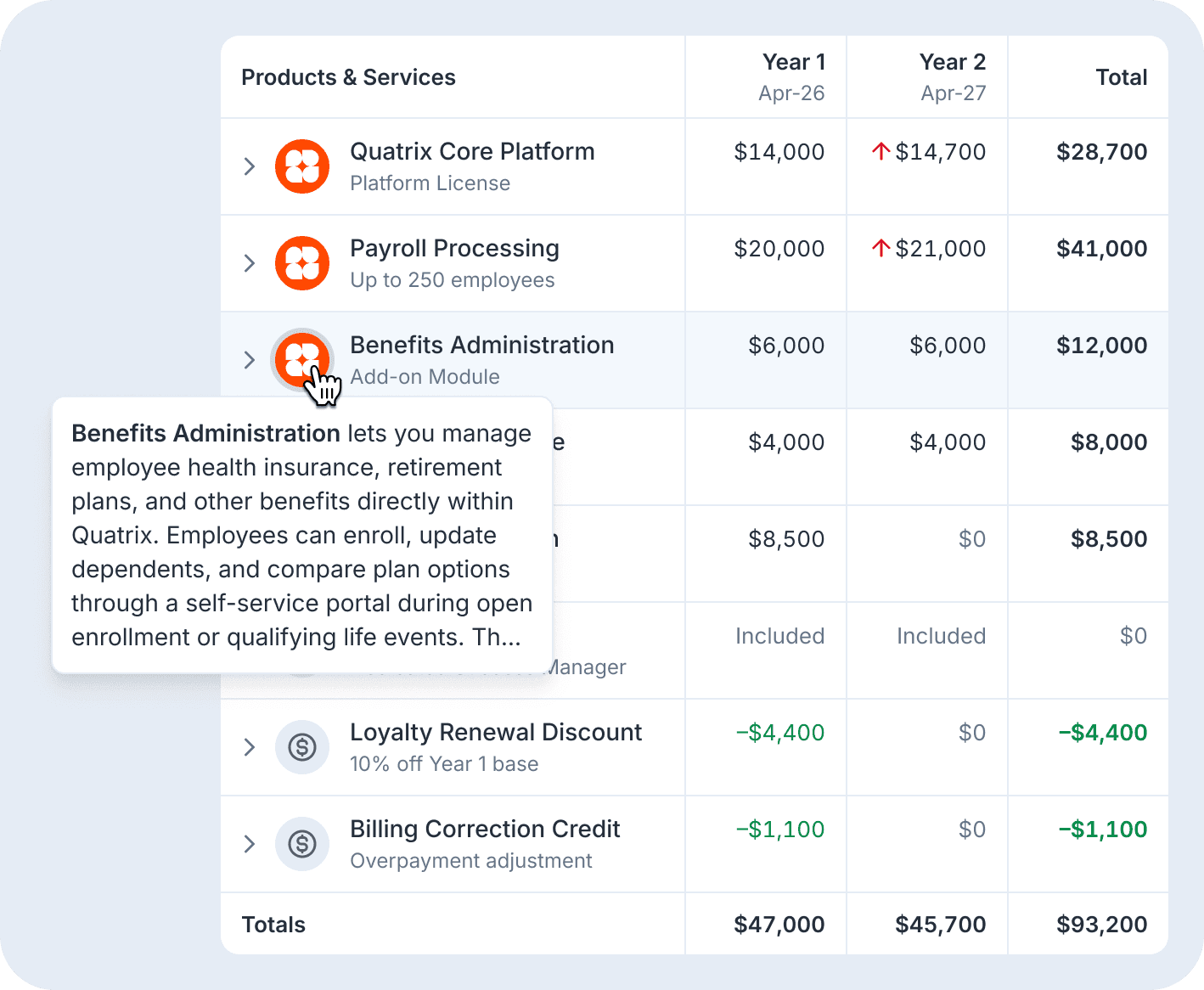
Vendors love bundling. It hides margins. It makes comparisons impossible. Line-item extraction exposes exactly what you're paying for—and what you shouldn't be.
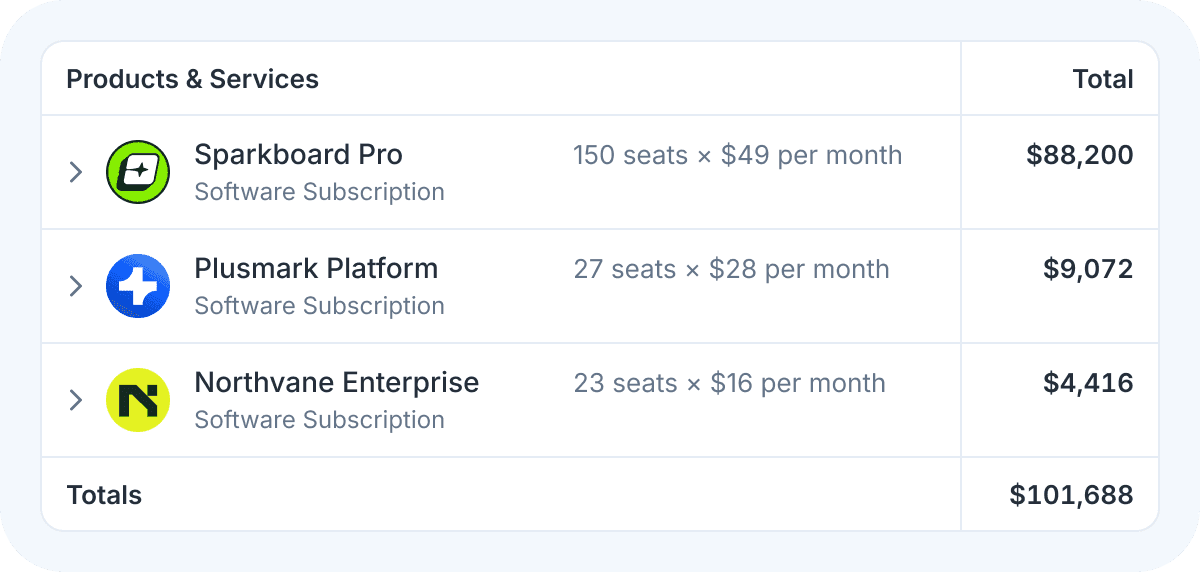
Modules, SKUs, add-ons, implementation fees—everything you purchased, extracted and standardized into a negotiable, comparable table.
One customer discovered they were paying for parking as a separate line item in their office lease. $8,400 a year buried on page 63. Another found three overlapping project management tools—nobody had noticed because nobody could see the full picture.
This is what makes line-item negotiation possible.
3. Multi-Tool Mapping: Know the Products, Not Just the Vendors
See through the bundling strategy
That "HubSpot" agreement? It might include Sales Hub, Marketing Hub, and CRM—three different products with three different use cases and three different costs.
One contract. Six distinct products. Zero visibility—until now.
BRM identifies the actual tools inside each vendor agreement, revealing overlaps and long-tail spend hiding in plain sight.
Stop managing vendors. Start managing your stack.
"The vendor knew everything. You knew very little. That gap is where your budget disappeared."
- Ancient BRM Proverb
4. Ask BRM: On-Page AI That Actually Knows Your Contracts
The answers the vendor doesn't want you to have
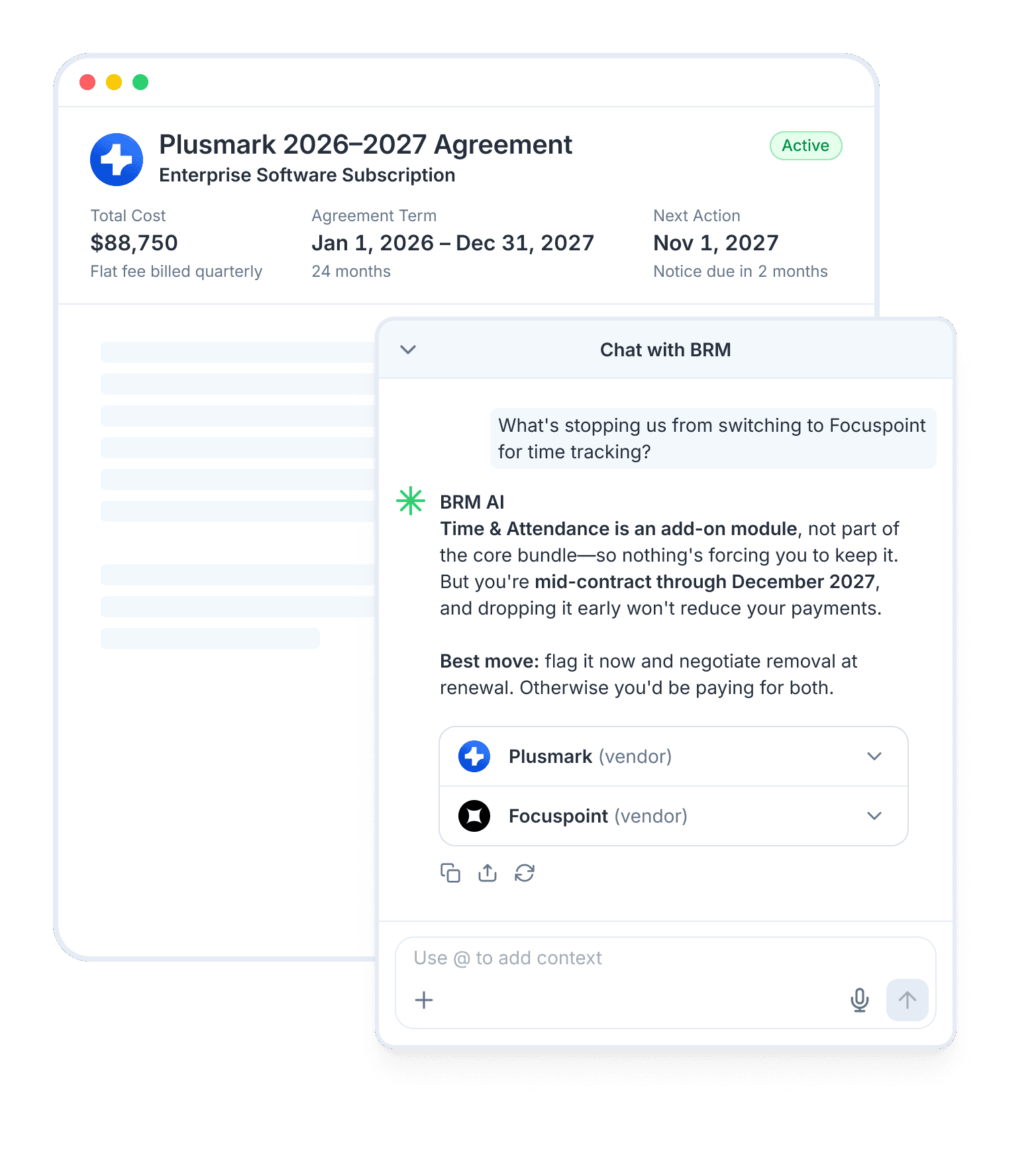
Ask plain-English questions directly on the agreement page:
- "How much would we pay for 15 more seats?"
- "Do we have other tools that do the same job?"
- "What happens if we cancel early?"
Get answers grounded in the actual contract, with citations to the source. No hallucinations. No guessing.
5. Always Current: Amendments Roll Forward Automatically
Amendments, upsells, ToS changes—they all roll into a single current view. You're always looking at what's actually in effect, not piecing together four documents to figure it out.
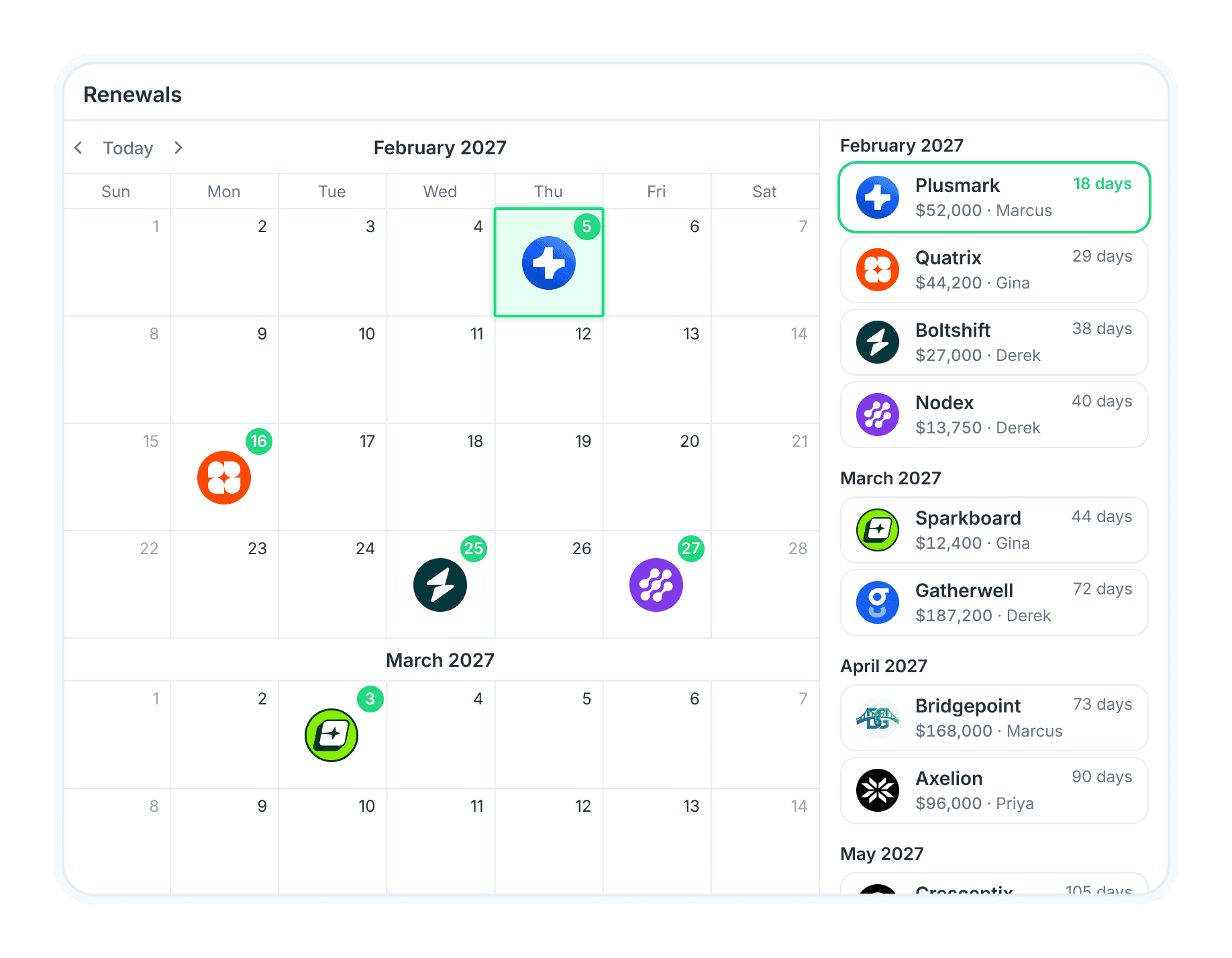
6. Never Miss a Renewal
Every agreement gets a scheduled review, even if there's no explicit end date. Next actions are surfaced so auto-renewals don't catch you off guard.
Because the renewal that costs $50K is the one you forgot existed.
What This Unlocks
Faster answers: From "I'll follow up" to "Here's the number and what to do."
Time back in your week: Stop spending 20 minutes hunting for answers to simple questions. That's 10+ hours per month returned to strategic work instead of PDF archaeology.
Granular control: Negotiate at the line-item level. Compare across vendors and products.
Long-tail visibility: Reveal overlaps and rationalize the stack—work you'd never finish manually.
Meeting-ready confidence: Walk into renewals with leverage. Answer the CFO's questions without hesitating.
The Proof
Closinglock found over five duplicate services they didn't know they were paying for.
Public hit their 20% increase in spending efficiency goal—their Head of Finance said it felt less like buying software and more like adding a teammate who always had her back.
Not edge cases. Not luck. Just what happens when you finally see what you're paying for.
How It Works
Experiences that feel like magic usually aren't.
Here's what that means in practice: Instead of imitating what others buy, you finally understand what you need. You get the real facts—not the facts the vendor wants you to see.
We've spent three years building an AI-native data foundation—our own ontology, taxonomy, and classification systems—that turns agreements into structured, queryable information.
We taught AI what to prioritize across 14 different agreement types. We built systems that can detect pricing models, extract line-items, map products to vendors, and answer questions while staying grounded in actual contract language.
It's the CTRL+F that reads your mind—because underneath, it knows what to look for.
Getting Started
The Agreements Overview is available today for all BRM customers and is the default when you open an Agreement.
Don't have BRM yet? See how you can start understanding your contracts in minutes, not months.
Breaking the Cycle
In enterprise procurement, the buyer is always the scapegoat. When the software fails to deliver, when the consultant's advice proves worthless, when the "digital transformation" transforms nothing—who gets blamed?
The person who signed the contract.
Not the vendor who overpromised. Not the salesperson who manufactured urgency. The buyer who didn't read page 41 carefully enough.
The Agreements Overview exists to end this cycle. Not by eliminating vendors—we need vendors. But by eliminating the information asymmetry that makes buyers into victims.
The vendor always knows your contract better than you do. They wrote it that way.
Not anymore.
Want to see it in action?
More articles
Keep reading on procurement and strategy
Best Practices
AI Token Spend 101: A Finance Leader's Guide to Usage-Based AI Costs
A finance-first guide to managing AI token spend: what tokens cost, why usage-based pricing is unpredictable, and a 6-step framework to baseline and forecast.
News
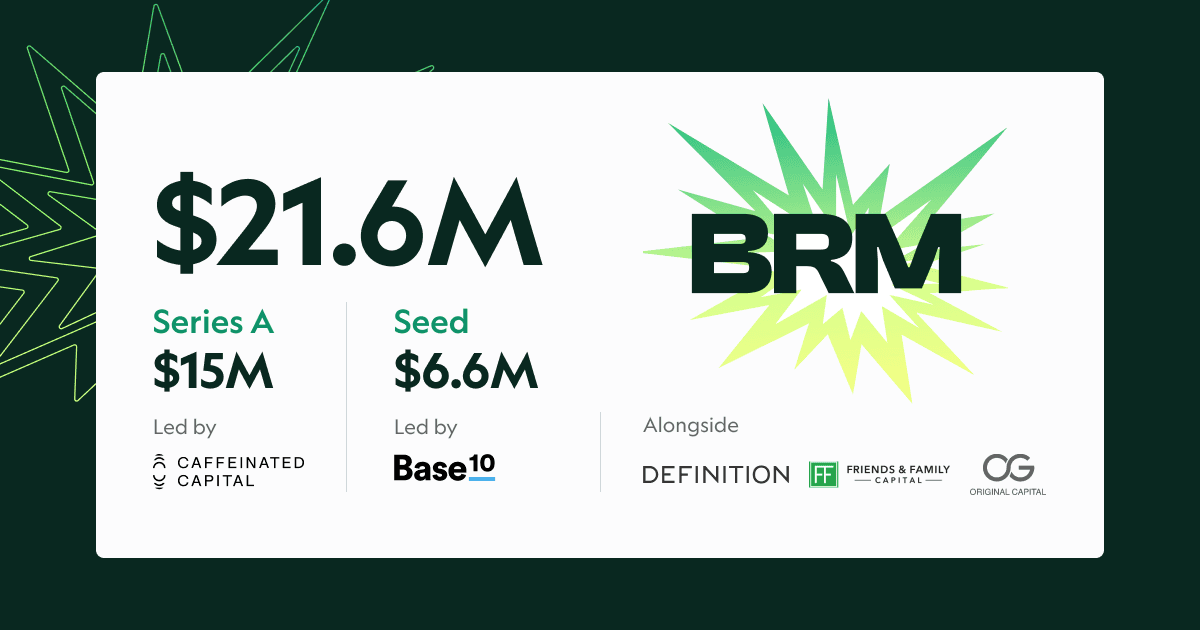
BRM Launches With $21.6M and AI SuperAgents to Help Companies Buy
Buying is broken, but BRM is here to fix it with $21.6M in funding and AI-powered SuperAgents that take on vendors for you, handling everything from contracts to compliance. While everyone else builds AI sales tools, BRM is tackling the painfully ignored buyer's side, already saving thousands of hours for companies like Tegus, Public, and Cadence.